
Commercial Finance Broker Fees: A UK Business Checklist
18 October 2026 · 16 min read

The lowest broker fee doesn’t automatically mean the lowest-cost finance. Commercial finance broker fees can be charged to your business, paid by a lender, or structured in both ways. That can make two offers look similar at first glance, even when their overall costs differ.
It’s understandable to want a clear figure before you proceed. But the broker’s fee is only one part of the decision. Interest, lender charges and repayment terms all affect what your business pays. The funding also needs to suit your cash flow, not just look attractive at the headline rate.
This checklist explains common broker payment models and what to look for in writing, including how fees and commission are disclosed. You’ll also learn how to compare the full cost and assess whether the terms fit your business. Lending Box matches UK limited companies and LLPs with funding options and supports applications and paperwork, helping make a complex decision easier to review.
Key Takeaways
- Commercial finance broker fees can be structured in different ways. Identify who pays, what the fee covers and when it may be due.
- Compare the complete cost of an offer, not just the broker fee or headline rate. Check how lender charges and repayment terms affect the overall commitment.
- Use a written checklist to review the broker’s service scope, fee basis, payment timing and cancellation terms before proceeding.
- Assess business loans, invoice finance and asset finance against your business needs and cash flow, as well as their costs.
- Lending Box matches limited companies and LLPs with finance options and supports applications and paperwork.
Commercial finance broker fees: what might a business pay for?
A broker fee is payment for arranging or supporting a finance application. It may be charged to the business, paid by a lender, or covered through a combination of payment sources. The arrangement depends on the broker and the funding offer, so don’t assume every broker is paid in the same way.
When reviewing an offer, separate three things: the broker’s remuneration, the lender’s charges and the cost of borrowing. They may appear alongside each other, but they pay for different things. A simple cost breakdown can help you see which amounts are payable upfront, which are included in repayments and which may depend on how you use a facility.
What does a commercial finance broker do?
A commercial finance broker helps a business explore funding that fits its purpose, circumstances and repayment needs. A broker can match a business with relevant options, explain the application process, help organise paperwork and communicate with lenders. The lender assesses the application and decides whether to offer finance. A broker can support an application, but can’t promise approval.
A broker arranges finance rather than lending its own funds. The Commercial mortgage broker overview gives a general example of this intermediary role. Lending Box works as a UK whole-of-market commercial finance broker for limited companies and LLPs, matching businesses with funding options and supporting applications and paperwork.
Which costs are broker fees and which are finance costs?
Broker remuneration is payment for the broker’s work; the cost of borrowing is what the business pays under the finance agreement. Keep them separate when reviewing an offer. A fee that looks small on its own doesn’t show the full cost of the funding.
- Broker fee or commission: Payment for arranging or supporting finance. The business may pay a stated fee, a lender may pay the broker commission, or both sources may contribute. The amount and timing vary by arrangement.
- Interest or finance charge: The amount charged for using the funds, set out in the finance terms. Check how it accrues and how repayments fit the business’s cash flow.
- Lender and product charges: Other charges may apply under the finance agreement. Their type and timing depend on the lender and product, so review the offer rather than assuming these charges are included in a broker fee.
Costs and terms can differ across business loans, invoice finance and asset finance. A business loan may set out repayments and interest over an agreed term. Invoice finance relates to funding against unpaid invoices, so check the charges and conditions for using the facility. Asset finance is linked to an asset and its funding terms. In each case, compare the written charges alongside the broker’s remuneration.
Ask for a clear breakdown before proceeding. It should show who pays each fee, what it covers and whether it is separate from the lender’s charges. This distinction makes offers easier to compare and helps prevent a broker fee from being mistaken for the complete cost of finance.
How commercial finance brokers may be paid
There isn’t one payment model for every commercial finance broker. The business might pay a fee directly, a lender might pay commission after a deal completes, or the broker might receive payment from both. The arrangement can depend on the broker’s agreement with the business, the lender and the type of finance involved.
For limited companies and LLPs comparing commercial finance broker fees, look beyond the headline amount. Identify who pays the broker, how the payment is calculated, when it becomes due and whether it changes the amount your business must repay.
Borrower-paid fees and lender-paid commission
With a borrower-paid fee, the business pays the broker under the agreed terms. A lender-paid commission is paid by the finance provider to the broker for arranging a completed transaction. Some arrangements combine the two. Commission terms can vary across products and cases, so neither route automatically makes an offer better or worse. Compare the full cost and suitability of the funding.
Knowing the payment source helps you understand the broker’s remuneration and assess the recommendation. If a lender pays commission, that doesn’t by itself show that the offer is unsuitable. Likewise, a direct fee doesn’t prove the broker has found the right option. Look for a plain explanation of how the broker is paid and whether the amount varies between available offers.
- Borrower-paid: Establish whether the fee is fixed or calculated using another stated basis, and whether it is payable separately or taken from funds advanced.
- Lender-paid: Find out which provider pays commission, how it is calculated and when it is earned.
- Combined: Check each payment separately so you can see whether the business pays a fee as well as the lender paying commission.
When might a broker fee become payable?
Timing depends on the documented agreement and transaction terms. A fee might be linked to an application, an offer, completion or another defined stage. Don’t assume a fee is only due if funds are released. Read the wording for the exact trigger, and check what happens if the application doesn’t proceed or the transaction is cancelled.
Keep brokerage charges separate from finance-provider charges. A broker fee pays for the agreed brokerage service; a lender’s arrangement charge or other product cost is imposed under the finance terms. Both may affect the business, but they can have different payment dates and cancellation conditions.
Before proceeding, get the payer, amount, calculation basis, payment date and cancellation terms in writing. If any part is unclear, request a written breakdown before agreeing to the arrangement. It gives you a reliable basis for comparing offers and planning cash flow.
Businesses weighing up funding routes can explore commercial finance options through Lending Box, which matches limited companies and LLPs with options across the market and supports applications and paperwork.
Compare the full cost across commercial finance options
A broker fee won’t tell you whether one type of funding is more suitable than another. Compare each offer against the same business need, then review all charges and repayments over the proposed term. A lower upfront fee may sit alongside a higher overall commitment, while a different repayment structure may suit your cash flow better.
Use the table to organise the questions you need answered. It shows cost categories to review, not a set of charges that applies to every offer.
| Finance type | Separate the broker payment from | Check how the funding works |
|---|---|---|
| Business loan | Interest and any lender charges under the offer. | Term, repayment amount and frequency, total repayable, and any disclosed security or early settlement terms. |
| Invoice finance | Charges for using or operating the facility. | How costs relate to the facility’s use, the invoices funded, and the business’s cash-flow pattern. |
| Asset finance | Arrangement costs and any other charges set out by the finance provider. | The repayment commitment over the term, how it relates to the asset, and any disclosed security or early settlement terms. |
Compare fees for the finance type you’re considering
For a business loan, list the broker’s remuneration separately from interest and lender charges. Then compare the total amount repayable and the timing of repayments. With invoice finance, distinguish any broker payment from the costs of operating the facility. Check how those costs may change with use rather than relying on a single headline figure. For asset finance, separate arrangement costs from the wider repayment commitment linked to funding the asset.
These categories aren’t interchangeable. A cost that applies to one product may not apply to another, and terms can differ between offers. Ask for each relevant charge to be shown clearly, including whether it is paid upfront, added to borrowing or charged during the facility’s use.
Look beyond the headline fee
Compare like with like. Put the proposed amount, term, repayment frequency and total repayable side by side. Include the broker fee and any lender or product charges, then review early settlement terms and security requirements where the offer discloses them. If two offers use different repayment structures, consider how each would affect cash available for wages, suppliers and other commitments.
Finally, test the funding against its purpose. A facility intended to support cash flow may work differently from finance for an asset purchase. Weigh cost, structure and business fit together. Commercial finance broker fees alone can’t establish which funding option is best. Look at the full commitment and whether repayments remain manageable across the proposed term.
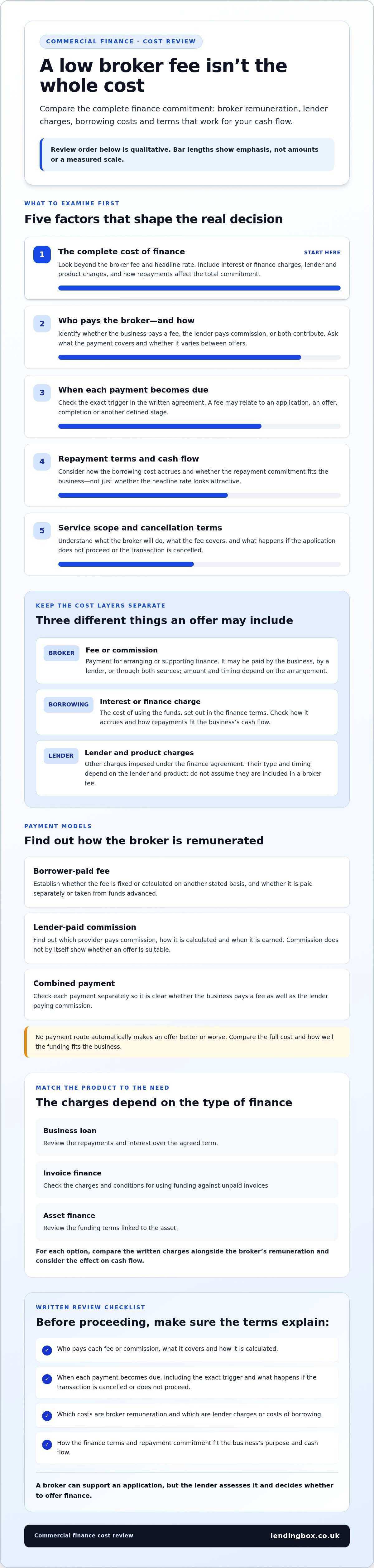
Commercial finance broker fees checklist: what to review before proceeding
Before agreeing to a broker’s terms or accepting a finance offer, put the fee information beside the service description and funding proposal. A clear written record helps you identify what you’ll pay, what the broker will do and what could happen if the transaction changes or stops.
Use this ordered checklist to review the paperwork:
- Read the scope of service. Check what the broker has agreed to do. Does the service cover matching your business with finance options, application support and communication with lenders? Note any work excluded from the agreement so you understand what support to expect.
- Identify who pays the broker. Establish whether your business pays a fee, a lender pays commission, or both contribute. If a lender pays commission, check whether the amount or basis is disclosed for the proposed arrangement. Don’t assume the payment route is the same for every offer.
- Check how any borrower-paid fee is calculated. Look for a fixed amount or a clearly described calculation basis. Confirm what the fee covers and whether it is payable separately, deducted from funds or handled in another stated way. If the calculation depends on a figure in the proposal, make sure that figure is clear.
- Pin down when payment is due. Find the precise trigger in the written terms. It could relate to an application, an offer, completion or another agreed stage. Check whether payment is due if the finance doesn’t complete, and note any cancellation conditions.
- Review additional charges and VAT treatment. Look for charges for extra work, changes to the application or services beyond the original scope. Check whether VAT is included, added or described separately, where this is stated. Keep these amounts distinct from charges imposed by the finance provider.
- Match the service to your needs. Compare the written scope with the help your business needs through the process. If you expect support with paperwork or lender communication, make sure the agreement explains whether that work is included.
- Keep a complete record. Save the fee disclosure, broker agreement, lender proposal and finance documents together. Record any written clarification or change to the terms. This gives your team a straightforward audit trail when reviewing the offer or checking an invoice.
Quick check: confirm the service, payer, fee basis, amount, payment trigger, cancellation terms and any disclosed commission in writing. If a proposal uses broad wording, get the relevant detail set out before proceeding. This is a practical way to assess commercial finance broker fees without confusing broker remuneration with lender charges.
For help matching finance options and organising an application, explore commercial finance with Lending Box. Limited companies and LLPs can review funding routes with support through the paperwork process.
How Lending Box supports businesses exploring commercial finance
Reviewing broker remuneration and comparing offers takes time, especially when your business is weighing up different types of funding. Lending Box supports UK limited companies and LLPs by matching them with finance options across the market. It acts as a broker, not a direct lender, and helps businesses work through the application process.
The fee checklist still matters. As you explore options, keep the proposed funding terms and any written fee information together. This gives you a clearer view of the full commitment, rather than treating commercial finance broker fees as the only cost to assess.
From eligibility insight to a supported application
Lending Box’s in-house lending model provides eligibility insights without impacting credit scores. These insights can help a business consider possible routes before deciding which options to explore further. They aren’t a promise of an offer or approval. The finance provider makes its own assessment.
A dedicated relationship manager guides businesses through their options and supports applications and paperwork. This can help keep information organised as the process moves forward. Lending Box’s founders bring more than ten years of direct business-lending experience, which informs the guidance businesses receive.
As you review a proposal, use the same questions from the checklist: what is the funding for, how do repayments fit the business’s cash flow, and what fees or lender charges are set out in writing? A relationship manager can guide the application process, while the written offer remains essential for understanding its specific terms.
Explore finance options that fit the business need
The right route depends on the purpose of the funding and the terms available. Lending Box helps businesses explore options including:
- Business loans for a defined funding requirement.
- Revenue-based finance as a funding route to consider in relation to business revenue.
- Invoice finance connected to unpaid customer invoices.
- Asset finance for funding linked to business assets.
These categories work differently, so don’t assume one will suit every business or that the lowest broker fee makes it the best choice. Consider the intended use, repayment structure, term and any disclosed charges together. Then compare those details with the business’s expected cash flow and the written scope of broker support.
Exploring options with a broker can make a complex process easier to organise, while leaving the funding decision with the business and lender. Explore business finance options with Lending Box.
Make your next funding decision with clarity
Use the information you’ve gathered to turn a finance proposal into a decision your business can stand behind. Set out what the funding needs to achieve, the repayment level your cash flow can support and the terms you still need explained. This gives directors and finance teams a shared basis for weighing options, rather than focusing on one headline figure.
Commercial finance broker fees are one part of that decision, not a measure of whether funding will work for your business. Take time to understand the offer’s complete commitment and how it fits your plans. Lending Box can help your limited company or LLP consider finance options and work through the application process.
Explore business finance options with Lending Box. A clear next step can make a complex funding decision feel more manageable.
Frequently Asked Questions
Can a commercial finance broker charge both the business and the lender?
Yes, both payments may form part of an arrangement, but don’t assume they do. A borrower-paid fee is charged to the business; lender-paid commission comes from the finance provider. For the proposed deal, check the disclosure for each payment and what it relates to. Also compare the finance offer separately, since interest and provider charges aren’t automatically included in commercial finance broker fees.
Do I have to pay a broker fee if my business finance application is declined?
It depends on the agreement and the event that makes the fee payable. For example, terms might distinguish work completed at application stage from a fee linked to completion. Read the agreement before submitting an application, and look for any application charge, cancellation provision or wording about a declined case. If the terms don’t explain what happens, get that point clarified in writing before proceeding.
Is VAT charged on commercial finance broker fees?
VAT treatment depends on the service and how the fee is structured, so the quoted figure alone may not answer the question. Check the fee disclosure or invoice for whether VAT is included, shown separately or not charged. Don’t assume every finance-related item has the same VAT treatment. If you need to know whether your business can reclaim VAT, speak to your accountant or tax adviser about your circumstances.
Can a broker fee be added to a business finance facility?
It may be possible, depending on the lender, product and offer terms. If the fee is financed rather than paid separately, check how it changes the amount borrowed and the repayment schedule. For example, adding a fee to the borrowing could increase the balance on which charges apply, depending on the agreement. Compare the figures in the proposal and identify broker remuneration separately from lender charges.
When is a commercial finance broker fee usually payable?
There’s no single payment date for every broker agreement. The written terms might tie payment to an application, an offer, completion or another defined event. Check what action triggers an invoice and whether the due date is stated. If funding is delayed or doesn’t complete, refer to the agreement’s conditions rather than relying on an assumed standard practice. Keep the broker terms with the finance offer.
Does using a commercial finance broker guarantee business loan approval?
No. A broker can help identify possible funding routes and support an application, but the lender decides whether to offer finance. An eligibility indication is not approval, and an offer may include conditions or documents the business must provide. Before relying on funding for a purchase or commitment, read the lender’s formal offer and confirm that its conditions and repayment terms work for the business.
Frequently Asked Questions
A commercial finance broker helps a business explore funding that fits its purpose, circumstances and repayment needs. A broker can match a business with relevant options, explain the application process, help organise paperwork and communicate with lenders. The lender assesses the application and decides whether to offer finance. A broker can support an application, but can’t promise approval. A broker arranges finance rather than lending its own funds. The Commercial mortgage broker overview gives a general example of this intermediary role. Lending Box works as a UK whole-of-market commercial finance broker for limited companies and LLPs, matching businesses with funding options and supporting applications and paperwork.
Broker remuneration is payment for the broker’s work; the cost of borrowing is what the business pays under the finance agreement. Keep them separate when reviewing an offer. A fee that looks small on its own doesn’t show the full cost of the funding. Costs and terms can differ across business loans, invoice finance and asset finance. A business loan may set out repayments and interest over an agreed term. Invoice finance relates to funding against unpaid invoices, so check the charges and conditions for using the facility. Asset finance is linked to an asset and its funding terms. In each case, compare the written charges alongside the broker’s remuneration. Ask for a clear breakdown before proceeding. It should show who pays each fee, what it covers and whether it is separate from the lender’s charges. This distinction makes offers easier to compare and helps prevent a broker fee from being mistaken for the complete cost of finance. There isn’t one payment model for every commercial finance broker. The business might pay a fee directly, a lender might pay commission after a deal completes, or the broker might receive payment from both. The arrangement can depend on the broker’s agreement with the business, the lender and the type of finance involved. For limited companies and LLPs comparing commercial finance broker fees, look beyond the headline amount. Identify who pays the broker, how the payment is calculated, when it becomes due and whether it changes the amount your business must repay.
Timing depends on the documented agreement and transaction terms. A fee might be linked to an application, an offer, completion or another defined stage. Don’t assume a fee is only due if funds are released. Read the wording for the exact trigger, and check what happens if the application doesn’t proceed or the transaction is cancelled. Keep brokerage charges separate from finance-provider charges. A broker fee pays for the agreed brokerage service; a lender’s arrangement charge or other product cost is imposed under the finance terms. Both may affect the business, but they can have different payment dates and cancellation conditions. Before proceeding, get the payer, amount, calculation basis, payment date and cancellation terms in writing. If any part is unclear, request a written breakdown before agreeing to the arrangement. It gives you a reliable basis for comparing offers and planning cash flow. Businesses weighing up funding routes can explore commercial finance options through Lending Box, which matches limited companies and LLPs with options across the market and supports applications and paperwork. A broker fee won’t tell you whether one type of funding is more suitable than another. Compare each offer against the same business need, then review all charges and repayments over the proposed term. A lower upfront fee may sit alongside a higher overall commitment, while a different repayment structure may suit your cash flow better. Use the table to organise the questions you need answered. It shows cost categories to review, not a set of charges that applies to every offer.
Yes, both payments may form part of an arrangement, but don’t assume they do. A borrower-paid fee is charged to the business; lender-paid commission comes from the finance provider. For the proposed deal, check the disclosure for each payment and what it relates to. Also compare the finance offer separately, since interest and provider charges aren’t automatically included in commercial finance broker fees.
It depends on the agreement and the event that makes the fee payable. For example, terms might distinguish work completed at application stage from a fee linked to completion. Read the agreement before submitting an application, and look for any application charge, cancellation provision or wording about a declined case. If the terms don’t explain what happens, get that point clarified in writing before proceeding.
VAT treatment depends on the service and how the fee is structured, so the quoted figure alone may not answer the question. Check the fee disclosure or invoice for whether VAT is included, shown separately or not charged. Don’t assume every finance-related item has the same VAT treatment. If you need to know whether your business can reclaim VAT, speak to your accountant or tax adviser about your circumstances.
It may be possible, depending on the lender, product and offer terms. If the fee is financed rather than paid separately, check how it changes the amount borrowed and the repayment schedule. For example, adding a fee to the borrowing could increase the balance on which charges apply, depending on the agreement. Compare the figures in the proposal and identify broker remuneration separately from lender charges.
There’s no single payment date for every broker agreement. The written terms might tie payment to an application, an offer, completion or another defined event. Check what action triggers an invoice and whether the due date is stated. If funding is delayed or doesn’t complete, refer to the agreement’s conditions rather than relying on an assumed standard practice. Keep the broker terms with the finance offer.
No. A broker can help identify possible funding routes and support an application, but the lender decides whether to offer finance. An eligibility indication is not approval, and an offer may include conditions or documents the business must provide. Before relying on funding for a purchase or commitment, read the lender’s formal offer and confirm that its conditions and repayment terms work for the business.