Business loan eligibility for new limited companies
1 November 2026 · 11 min read

 Business funding
A new limited company can apply for a business loan, but approval depends on its trading history, finances and credit profile. For a new limited company, lenders may consider its trading history, while start-up finance may suit businesses with a shorter record. A short trading record isn’t an automatic barrier, but it can affect which options fit.
It’s understandable to focus on whether the company is profitable or has built a credit history. Lenders also consider existing debts, cash flow, the amount requested and whether repayments look affordable. The application is about the business’s ability to repay, not simply how recently it was registered.
This guide explains how business loans work and what lenders may assess when a limited company is new. You’ll learn how profitability, credit, debt, loan size and repayment terms can shape an application, and what information to prepare before applying.
Key Takeaways
- Map existing debts against cash flow before applying; lenders commonly use a debt-service coverage ratio benchmark of 1.25.
- Prepare for lenders to weigh trading history and profitability alongside forecasts, bank statements and credit records.
- Set a borrowing amount your cash flow can support, as lenders usually want it to cover monthly repayments by at least double.
- Review the company’s eligibility basics, including its directors, trading record, business activity and application documents.
Borrowing with existing debt or poor credit
Existing debt or an imperfect credit record does not automatically rule out borrowing. Lenders assess affordability, credit history and proposed loan terms together.
Credit checks and affordability
Affordability checks compare income with existing and proposed repayments. Lenders commonly look for a business debt service coverage ratio (DSCR) of at least 1.25. That benchmark means income is 25% higher than debt obligations.
Prepare recent bank statements, cash flow forecasts, filed accounts and details of current debts. A hard credit search during a full application can affect the applicant’s credit score, so understand when the lender will make one.
Business and director credit histories
Lenders may consider both the company’s credit record and its directors’ personal histories. A new limited company may have little borrowing history, so a director’s record can help lenders assess how credit has been managed.
Before applying, review business and personal credit records for errors. If an application is rejected, ask the relevant credit reference agency to correct mistakes, then address the lender’s stated concerns. Guidance recommends waiting three to six months before applying again.
Creditworthiness and personalised quotes
Creditworthiness combines repayment capacity with the wider picture of the business. Lenders may weigh income, current debt, cash flow, filed accounts and the purpose of the borrowing. A business plan should explain how the funds support trading and how repayments fit expected cash flow.
Give accurate details of the amount requested and existing commitments. A personalised quote is based on the information provided and lender assessment. Compare proposed repayments with forecast income and cash flow, not turnover alone.
Personal guarantees and director liability
A personal guarantee can make a director personally responsible for the debt covered by its terms if the company does not repay. This may put personal assets at risk. Read the guarantee’s scope, limits and duration before signing, and check whether it covers one loan or wider liabilities.
Company borrowing does not automatically make a director personally liable, but signing a guarantee creates a separate commitment. Check how the guarantee relates to any security, and whether the repayment plan fits company cash flow before accepting the terms.
Loan amounts and repayment terms
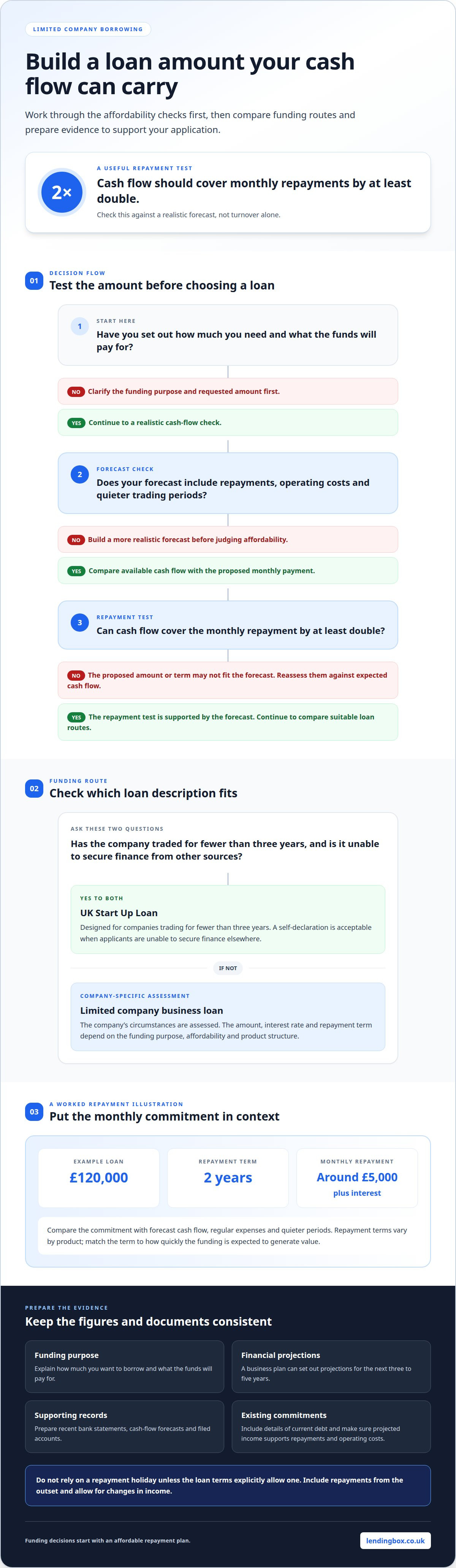
A suitable loan amount starts with a clear use for the funding and a repayment plan that fits cash flow. UK lenders usually want cash flow to cover monthly repayments by at least double. The amount offered also depends on the company’s finances, credit history and the loan type.
A UK Start Up Loan is designed for companies trading for fewer than three years. Applicants must be unable to secure finance from other sources, and a self-declaration is acceptable. A limited company business loan is assessed according to the company’s circumstances. The amount, interest rate and repayment term depend on the funding purpose, affordability and product structure.
To apply, explain how much you want to borrow and what the funds will pay for. A business plan can set out financial projections for the next three to five years. Lenders may also ask for recent bank statements, cash flow forecasts, filed accounts and details of existing debt. Keep the documents consistent: projected income should support the requested payments and operating costs.
Test affordability against a realistic trading forecast, not an optimistic sales target. For example, a £120,000 loan over two years would require repayments of around £5,000 plus interest each month. Compare that commitment with expected cash flow during quieter periods, as well as regular expenses. Repayment terms vary by product; match the term to how quickly the funding will generate value.
Don’t build your plan around a repayment holiday unless the loan terms explicitly allow one. Instead, include repayments from the outset and allow for changes in income. This helps you judge whether the proposed amount and term work together before submitting documents.
To explore a business loan option, prepare the funding purpose, projections and repayment figures first.
Can I apply for a business loan if my company isn’t profitable yet?
Yes, a new company can apply before it makes a profit. Lenders assess trading evidence, forecasts and whether the business can afford repayments.
Trading history and company age
Company age and trading history are different: registration creates the company, while trading shows it is earning or pursuing business income. Many UK lenders look for at least 12 months of trading, and high street banks may ask for two to three years. Alternative lenders may consider six to twelve months. Prepare evidence of trading, such as sales records and business bank statements.
Turnover and location criteria
For UK business loans, companies generally need to be registered and actively trading. Lenders also consider turnover, but there is no universal minimum; around £100,000 a year is a common benchmark. Some lenders may look for £50,000 to £100,000 turnover for larger facilities. If your company is pre-profit, show projected turnover for the next 12 months and explain the assumptions behind it.
Startup finance and loan alternatives
Startup finance can suit a company with limited trading accounts. A business plan should explain the product or service, target customers, funding purpose and financial projections. Alternatives to a standard loan include revenue-based finance, invoice finance, asset finance and a business credit card. Match the option to the business: invoice finance relies on eligible unpaid invoices, while asset finance is linked to equipment or other assets.
Security and personal guarantees
A new UK limited company may access unsecured borrowing, but unsecured loans are typically available to businesses with at least 12 months of trading. Some early-stage products are designed for younger businesses. A lender may require security or a director’s personal guarantee; neither is universal. A guarantee can make the director personally responsible for covered debt, so read its terms before signing. Secured lending puts the named collateral at risk if repayments aren’t made.
Eligibility for limited companies and LLPs
Active UK limited companies and LLPs can explore business finance, but lenders assess the business structure, trading evidence and repayment capacity. Registration alone does not show whether the business can afford borrowing.
For a typical application, at least one UK-resident director or owner must be aged 18 or over. Lenders may also ask for the company registration number, trading start date, business type, employee count, turnover, net profit, existing debts and details of assets offered as security. Keep these details accurate and consistent across the application and supporting documents.
An LLP and a limited company have different legal structures, so make sure the application identifies the correct applicant. The lender assesses the finances and obligations of the borrowing business, not just the person completing the form. For a new company, include available accounts and forecasts, even if it has not recorded a profit. Explain any gap between current trading and projected income.
Before applying, review the common reasons lenders reject applications:
- An incomplete form or late paperwork
- Turnover below the lender’s threshold
- An excluded business activity
- Poor business or personal credit, or limited trading history
- Excessive debt or insufficient collateral
A short trading record, including less than 12 months, can narrow the available choices. It doesn’t replace the need to show how repayments could be met. Start-up loans may suit some early-stage businesses, whilst other applications depend on the lender’s criteria, the company’s finances and any security offered. Check that the requested amount matches the funding purpose and forecast cash flow.
Prepare accurate company details, personal credit information and financial documents before applying. Explore business finance options for a route that fits your company’s structure and stage.
Lending Box: Business loan
Lending Box helps UK limited companies and LLPs explore business finance for a loan application. As a whole-of-market broker, it matches companies with options including business loans, revenue-based finance, invoice finance and asset finance.
Lending Box’s in-house lending model analyses company data to provide initial eligibility insights without impacting your credit score. A dedicated relationship manager guides you through the options and handles application paperwork. A full credit search takes place only at full application with your agreement.
This can help if your trading history is short, cash flow is uneven or the right funding structure isn’t obvious. Compare options against your funding purpose and repayment capacity, rather than choosing solely by the headline borrowing amount.
Contact Lending Box to discuss your company’s business finance needs.
Turn your funding plans into a clear next step
Before pursuing finance, define the business milestone the funds need to support. Set out what the money will enable, when the company expects to use it and what progress would look like. This gives your funding decision a practical test: does the proposed borrowing support a specific business need?
For a new limited company, business loan eligibility is easier to assess when the application tells a consistent story. Align the funding purpose with the company’s plans and financial information. This helps make the next conversation more focused, whether you’re exploring a business loan or another finance structure.
Lending Box helps businesses explore finance options suited to their circumstances. Bring a clear outline of the intended use and the questions you need answered. A focused discussion can help you understand potential routes and decide what to do next, without treating borrowing as a goal in itself.
Discuss your funding options with Lending Box and take the next step with a clearer plan.
Frequently Asked Questions
How do business loans work?
An unsecured business loan provides a fixed lump sum, repaid over an agreed term with interest and no asset pledged as security. A personal guarantee from directors is common. Check the repayment schedule, early settlement terms and any guarantee before accepting an offer. Shorter terms mean higher monthly repayments.
How much can I borrow?
The amount depends on the product, lender assessment and what the company can afford to repay. Indicative only. Subject to lender assessment and approval. Compare proposed repayments with forecast cash flow before deciding whether the borrowing fits.
What types of businesses are eligible for a business loan?
UK applicants can include sole traders, partnerships and limited companies. Charities and non-profit organisations can also apply, although they often have fewer lenders to choose from. Eligibility can depend on the organisation’s trading activity and sector. Some lenders restrict applications from sectors such as gambling and property investment, so the business’s activities should be described accurately.
How can I improve my chances of being approved?
Make the application easy to assess: show how the funds will be used and connect that plan to realistic business income. Check that the figures agree with your accounts and forecasts. If you’ve previously been declined, address the reasons before applying again. A clear explanation of how borrowing supports a specific business objective helps lenders assess the proposal.
How do I apply for funding?
For an initial Lending Box match, enter your company name on its website. The in-house assessment provides eligibility insights without affecting your credit score; a full credit search happens only at full application with your agreement. You’ll need an active limited company registration, three to six months of bank statements, latest filed accounts and director ID. Indicative only. Subject to lender assessment and approval.
What are the eligibility criteria for a business loan for a new UK limited company?
The company needs active UK registration, and lenders generally expect at least one UK-resident director or owner aged 18 or over. They assess the company’s trading record, turnover, credit profile, existing debts and repayment capacity. They may also consider the business sector and any security offered. A new company should provide accurate registration details and a clear account of its trading plans.
Frequently Asked Questions
An unsecured business loan provides a fixed lump sum, repaid over an agreed term with interest and no asset pledged as security. A personal guarantee from directors is common. Check the repayment schedule, early settlement terms and any guarantee before accepting an offer. Shorter terms mean higher monthly repayments.
The amount depends on the product, lender assessment and what the company can afford to repay. Indicative only. Subject to lender assessment and approval. Compare proposed repayments with forecast cash flow before deciding whether the borrowing fits.
UK applicants can include sole traders, partnerships and limited companies. Charities and non-profit organisations can also apply, although they often have fewer lenders to choose from. Eligibility can depend on the organisation’s trading activity and sector. Some lenders restrict applications from sectors such as gambling and property investment, so the business’s activities should be described accurately.
Make the application easy to assess: show how the funds will be used and connect that plan to realistic business income. Check that the figures agree with your accounts and forecasts. If you’ve previously been declined, address the reasons before applying again. A clear explanation of how borrowing supports a specific business objective helps lenders assess the proposal.
For an initial Lending Box match, enter your company name on its website. The in-house assessment provides eligibility insights without affecting your credit score; a full credit search happens only at full application with your agreement. You’ll need an active limited company registration, three to six months of bank statements, latest filed accounts and director ID. Indicative only. Subject to lender assessment and approval.
The company needs active UK registration, and lenders generally expect at least one UK-resident director or owner aged 18 or over. They assess the company’s trading record, turnover, credit profile, existing debts and repayment capacity. They may also consider the business sector and any security offered. A new company should provide accurate registration details and a clear account of its trading plans.