Personal guarantee insurance costs for UK businesses
29 October 2026 · 12 min read

 Business funding
There isn’t one fixed personal guarantee insurance cost in the UK in 2026. The premium depends on the amount guaranteed, the business’s financial position and track record, its structure, the loan term and the cover required. A personal guarantee can leave a director personally responsible for company debt, so it’s important to weigh the premium against the protection the policy provides.
It’s sensible to want a clear figure before deciding whether personal guarantee insurance is worthwhile. But the premium depends on more than the loan amount: the business’s finances and the guarantee’s terms also affect the cost.
This guide explains what personal guarantee insurance covers, when exclusions and claim conditions may apply, and what affects the premium. You’ll also learn how to weigh the cover against your borrowing, so you can make an informed decision without getting bogged down in insurance jargon.
Key Takeaways
- Understand how personal guarantee insurance can reduce a director’s exposure if the business cannot repay its borrowing.
- Learn which policy exclusions and claim conditions can affect whether cover applies.
- See how the guarantee, loan term and company finances influence the premium.
- Find out how to compare the insurance cost with the protection and finance your business needs.
What is Personal Guarantee Insurance?
A personal guarantee can make a director personally liable for a business loan if the company defaults. Personal guarantee insurance can cover a defined share of that exposure, reducing the amount the insured person may have to pay themselves. The policy covers the specified guarantee, not every debt or personal asset automatically.
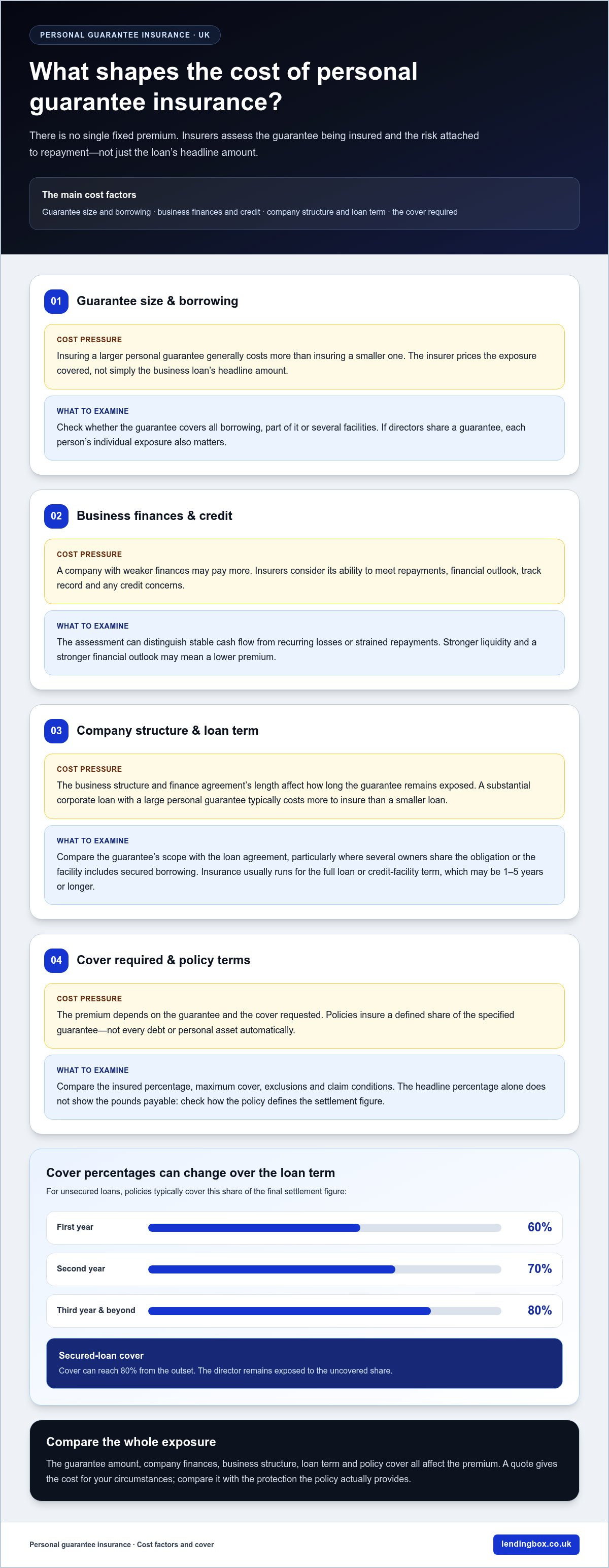
Cover depends on the loan type and policy terms. For unsecured loans, policies typically cover 60% of the final settlement figure in the first year, 70% in the second year, then 80% in the third year and beyond. Secured-loan cover can reach 80% from the outset. Most policies cover 70% to 80% of the guaranteed amount, leaving some exposure with the director. The percentage is not necessarily a limit on the pounds payable: check the policy’s maximum cover and how it defines the settlement figure.
Which UK insurers offer personal guarantee insurance in 2026? Specialist insurers offer these policies in the UK, directly or through brokers. Compare the wording, cover limits and claim conditions, rather than relying on the headline percentage.
What are the eligibility requirements? Cover may be available for a personal guarantee on a new or existing loan. Eligibility depends on the guarantee, finance facility, applicant and policy terms.
A spouse is not insured automatically just because they share a home or household finances. Cover applies to the person named and the guarantee insured. If a spouse signs a guarantee, the policy must include their own exposure.
Is the premium tax deductible? Tax treatment depends on who pays the premium and how it relates to the business. Ask an accountant to assess your circumstances before treating it as a business expense.
How do you apply, and what documents are needed? Begin with the guarantee and loan terms. An application commonly requires the loan agreement, guarantee wording and business financial information, allowing the insurer to assess the exposure and requested cover.
What are the risks and alternatives? Insurance leaves the uncovered share with the guarantor, and exclusions or claim conditions may limit payment. Alternatives include negotiating the guarantee’s scope or considering finance that does not require one. Premiums depend on the guarantee, business finances, structure and loan term. A quote gives the cost for your circumstances.
Policy exclusions and claim conditions
Before buying personal guarantee insurance, compare the policy wording with the guarantee and loan documents. Cover depends on the guarantee insured, the event that triggers a claim and the insurer’s evidence requirements. A policy does not automatically protect every personal asset or every liability connected to a business.
Read the exclusions as carefully as the claim conditions. Check which defaults qualify, when you must notify the insurer, what documents prove the debt and how the settlement amount is calculated. The policy may also specify steps the director must take after the business defaults. Missing a deadline or failing to provide required evidence can affect a claim, so note each condition before signing.
Take extra care with secured borrowing. If a guarantee supports a loan secured against business or personal assets, check how the policy treats the security and any recoveries. For example, the insurer may calculate its share after recoveries, as set out in the policy wording. A broker can explain the terms, but the written schedule and exclusions define the cover.
Personal guarantee insurance usually runs for the full term of the business loan or credit facility. That term may be 1-5 years or longer. Compare the policy end date with the loan’s repayment schedule; an extension or refinancing can change the borrowing arrangement and leave a mismatch in cover.
Some policies require annual renewal or include premium reviews. If yours does, note the renewal date and check whether the guarantee amount, insured percentage, exclusions or premium will change. Don’t assume renewal preserves identical cover. Before accepting revised terms, find out how a missed payment, amended facility or early repayment affects the policy.
Use a simple review before purchase: match names and amounts across the guarantee, loan agreement and insurance schedule; confirm the claim trigger and notification process; then check the expiry date. If secured finance is part of your funding plan, compare the structure with asset and property finance options before signing a personal guarantee.
Factors that affect insurance costs
The premium reflects the guarantee being insured and the risk attached to repayment. In the UK, key factors include the amount borrowed, the company’s financial position and track record, its structure and the loan term. Consider these together: a longer facility with a large guarantee creates a different exposure from a shorter loan with a smaller obligation.
Guarantee size and borrowing. Insuring a larger personal guarantee generally costs more than insuring a smaller one. The insurer prices the exposure covered, not simply the business loan’s headline amount. Check whether the guarantee covers all borrowing, part of it or several facilities. If directors share a guarantee, each person’s individual exposure also matters.
Business finances and credit. A company with more liquidity and a stronger financial outlook may pay less than one with weaker finances. Insurers assess the company’s ability to meet repayments and its financial track record. For example, stable cash flow may present a different risk from recurring losses or strained repayments. Credit concerns can also affect the assessment.
Company setup and loan term. The business structure and finance agreement’s length affect how long the guarantee remains exposed. A substantial corporate loan with a large personal guarantee typically costs more to insure than a smaller loan. Compare the guarantee’s scope with the loan agreement, especially when several owners share the obligation or the facility includes secured borrowing.
To understand a quote, map the main inputs before comparing options: guarantee amount, cover percentage, loan term, company finances and number of guarantors. Then compare like with like. A lower premium may reflect a smaller insured share or different policy terms, rather than equivalent protection. The personal guarantee insurance cost for a UK business in 2026 depends on its circumstances and the cover required; the case-specific quote reflects those factors.
How personal guarantee insurance costs are calculated
Insurers set the premium by assessing the exposure they agree to cover. Start with the personal guarantee, then identify the insured share and policy term. The premium also reflects the borrower’s circumstances, business finances, structure and loan length. A larger guaranteed obligation or weaker financial outlook may increase the assessed risk.
The calculation is not simply a percentage of the business loan. A guarantee may cover only part of borrowing, and the policy may insure only part of that guarantee. For example, if cover applies to 80% of an eligible guarantee, the remaining exposure stays with the director. The insurer considers the amount and conditions attached to its share.
Loan security also affects the exposure. With an unsecured facility, the lender may rely more heavily on the personal guarantee if the company cannot repay. A secured facility may involve business or personal assets and different recovery routes. These details affect the risk assessment and how the policy responds after default.
To understand a quotation, break down its inputs instead of focusing on one headline figure:
- Guarantee: establish the amount, whether it covers all borrowing, and whether other directors share responsibility.
- Insurance cover: compare the insured proportion with the amount left exposed to the guarantor.
- Business profile: consider the company’s liquidity, financial track record and outlook.
- Finance terms: note the loan duration, security and any changes to the facility.
Compare quotations on the same basis. A lower premium may cover a smaller share or come with different terms. Check the exclusions, claim conditions and cover period before weighing the value. This clarifies what the premium buys and which personal assets remain exposed if the business defaults.
Reviewing finance alongside guarantee exposure can help you assess the full commitment. Compare business finance options before deciding how borrowing and personal guarantees fit your plans.
Lending Box: Business loan
Lending Box helps UK limited companies and LLPs compare business finance options, including business loans. This can help when weighing borrowing against the personal commitment a lender may require. The goal is to understand suitable funding routes before agreeing to a guarantee.
As a whole-of-market broker, Lending Box matches businesses with finance options from lenders. Its in-house lending model analyses company data to provide eligibility insights without impacting credit scores during the initial match. A dedicated relationship manager guides you through the options and paperwork.
Depending on your funding needs, you could also consider revenue-based finance, invoice finance or asset finance. Each works differently, so compare repayment structures and how they fit your cash flow before deciding. Lending Box can help you assess these routes alongside your business loan requirements.
If you’re reviewing borrowing alongside a personal guarantee, contact Lending Box or visit lendingbox.co.uk to discuss your options.
Make your next funding decision with clarity
Use your next step to assess the financing decision, not just the policy premium. Set out what the funds will support, how repayments fit your cash flow and what personal exposure you’re prepared to accept. This gives you a clearer basis for deciding whether a guarantee-backed loan suits the business or another funding route may be a better fit.
Assessing the personal guarantee insurance cost in the UK in 2026 is part of that wider decision. Lending Box can help you explore business loans, revenue-based finance and invoice finance, then consider how each option aligns with your plans. The right route depends on the purpose of funding and how your business expects to repay it.
Bring your finance needs and guarantee questions into one conversation. Contact Lending Box to discuss the options available for your business. A clear view of the funding structure can help you move forward with greater confidence.
Frequently Asked Questions
Can I get PGI if my company is already in financial difficulty?
Financial difficulty matters to an insurer’s assessment, so disclose it when applying. The company’s financial position, track record and outlook help determine the risk being insured. Set out current borrowing, repayment status and any changes affecting the business. Accurate details help the insurer assess the guarantee in light of the company’s circumstances.
Does PGI cover 100% of the guarantee?
Usually, no. Most personal guarantee insurance policies cover 70% to 80% of the guaranteed amount, rather than the full exposure. The director typically remains responsible for 20% of the final settlement figure. Check the policy schedule for the insured proportion and any maximum limit. A stated percentage alone doesn’t show the full amount payable under every claim.
How does it work?
A director takes out cover for a specified personal guarantee linked to business borrowing. If the business defaults and the claim meets the policy conditions, the insurer assesses it against the insured guarantee. The policy then responds for its defined share. Keep the loan agreement, signed guarantee and insurance documents together so you can compare the details if circumstances change.
Can I get PGI if I have a poor credit history?
A poor credit history is relevant to the risk assessment, but it does not tell the whole story about the company. Insurers may consider the business’s finances, track record and outlook alongside the guarantee and loan terms. Be accurate about credit issues and explain their context, including whether they relate to the business or an individual director.
Does PGI cover all types of personal assets?
No. Personal guarantee insurance covers a defined proportion of an insured personal guarantee. It is not general insurance for every asset a director owns. If the business cannot repay, a lender may pursue assets under the guarantee. The policy reduces the director’s exposure to the covered amount; it does not insure a home, savings or other property individually.
How does PGI pay out?
The insurer assesses a claim against the policy wording, including the default, evidence provided and settlement amount. If the claim meets the conditions, the policy pays its defined share of the eligible amount. The calculation and payment process depend on the policy terms. Keep records of lender communications and repayment activity to support the assessment.
Frequently Asked Questions
Financial difficulty matters to an insurer’s assessment, so disclose it when applying. The company’s financial position, track record and outlook help determine the risk being insured. Set out current borrowing, repayment status and any changes affecting the business. Accurate details help the insurer assess the guarantee in light of the company’s circumstances.
Usually, no. Most personal guarantee insurance policies cover 70% to 80% of the guaranteed amount, rather than the full exposure. The director typically remains responsible for 20% of the final settlement figure. Check the policy schedule for the insured proportion and any maximum limit. A stated percentage alone doesn’t show the full amount payable under every claim.
A director takes out cover for a specified personal guarantee linked to business borrowing. If the business defaults and the claim meets the policy conditions, the insurer assesses it against the insured guarantee. The policy then responds for its defined share. Keep the loan agreement, signed guarantee and insurance documents together so you can compare the details if circumstances change.
A poor credit history is relevant to the risk assessment, but it does not tell the whole story about the company. Insurers may consider the business’s finances, track record and outlook alongside the guarantee and loan terms. Be accurate about credit issues and explain their context, including whether they relate to the business or an individual director.
No. Personal guarantee insurance covers a defined proportion of an insured personal guarantee. It is not general insurance for every asset a director owns. If the business cannot repay, a lender may pursue assets under the guarantee. The policy reduces the director’s exposure to the covered amount; it does not insure a home, savings or other property individually.
The insurer assesses a claim against the policy wording, including the default, evidence provided and settlement amount. If the claim meets the conditions, the policy pays its defined share of the eligible amount. The calculation and payment process depend on the policy terms. Keep records of lender communications and repayment activity to support the assessment.