Director's loan personal guarantee: liability and asset protection
26 November 2026 · 12 min read

 Business funding
Limited liability has a boundary. A personal guarantee can make a director personally responsible for company debt if the business fails to pay. Understanding director's loan personal guarantee protection starts with this rule: liquidation does not automatically end the director’s obligation under the guarantee.
It’s sensible to consider what a personal guarantee could mean for your finances. If a lender enforces it, personal assets such as your home, car, savings or investments may be at risk. The guarantee sets out which debt it covers and how much you could owe.
This article explains what a personal guarantee means, how liability can continue if a company enters liquidation, and how personal and family assets could be affected. It also looks at ways to limit a guarantee and the role personal guarantee insurance can play, helping you understand the potential exposure before making a borrowing decision.
Key Takeaways
- Understand whether a guarantee is secured or unsecured, and which borrowing it covers, before agreeing to it.
- Personal guarantee insurance may reduce some financial exposure, but it doesn’t remove the underlying repayment obligation.
- Liquidation doesn’t automatically end a director’s liability under a personal guarantee; the agreement’s terms still matter.
- Consider how enforcement could affect personal assets, and weigh the guarantee alongside suitable business finance options.
What is a personal guarantee?
A personal guarantee is an agreement that makes a director personally responsible for specified company debt if the company fails to pay. An unsecured guarantee relies on the director’s creditworthiness, while a secured guarantee is backed by an asset such as property. A director’s loan account is different: it records money owed between a director and their company. On its own, it does not promise a lender that the director will repay company borrowing.
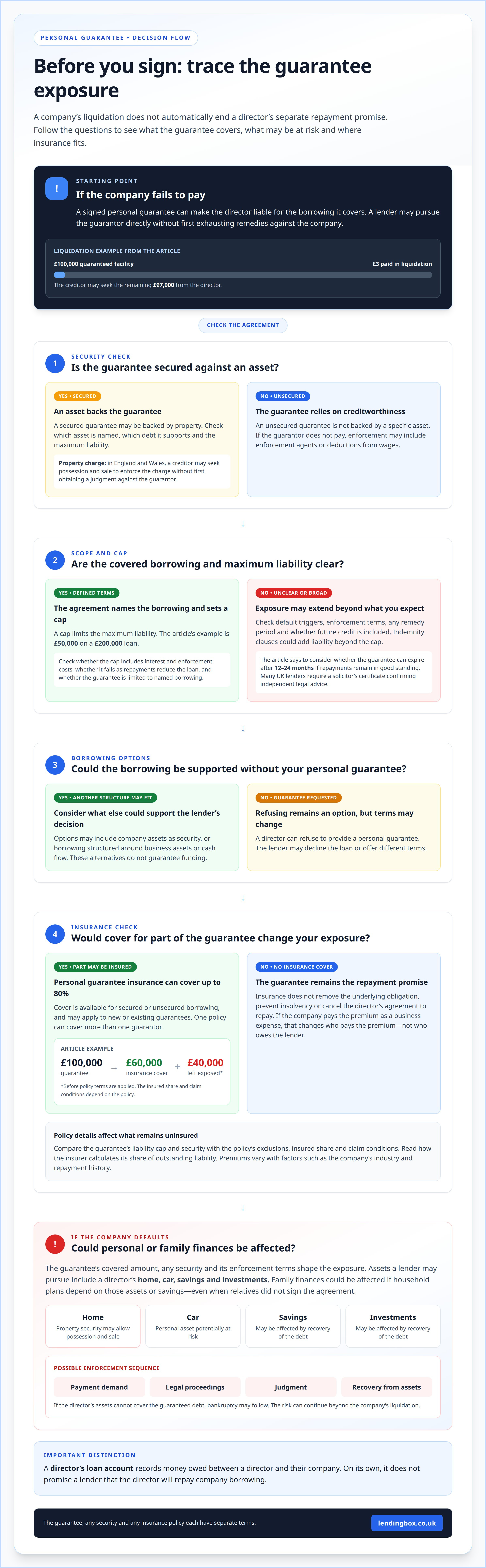
Personal guarantee insurance can cover part of the liability if a lender calls on the guarantee. Cover can be selected up to 80%, but the policy cannot insure the full guarantee. For example, £60,000 of cover on a £100,000 guarantee leaves £40,000 exposed, before policy terms are applied. The insured amount therefore reduces potential exposure; it doesn’t cancel the director’s agreement to repay.
Personal guarantee insurance can apply to guarantees for secured and unsecured borrowing. Cover may be available for new or existing guarantees, and one policy can cover more than one guarantor. The insured share and claim conditions depend on the policy. Read its terms alongside the guarantee, including which borrowing is covered and how the insurer calculates its share of the outstanding liability.
A business may pay personal guarantee insurance premiums as a business expense. This changes who pays the premium, not who owes the lender under the guarantee. If the company defaults, insurance may cover part of the liability, subject to the policy. It does not prevent insolvency or remove the director’s repayment obligation.
Before arranging cover, compare the guarantee’s liability cap and security with the policy’s exclusions, insured share and claim conditions. This helps show what remains uninsured. Premiums vary according to factors such as the company’s industry and repayment history. Independent legal advice can clarify the guarantee’s wording, while the policy sets separate limits on any claim.
Personal guarantee liability and company liquidation
A guarantee can make a director personally liable for company borrowing, and liquidation does not automatically end that separate obligation. Understanding director's loan personal guarantee protection means assessing personal exposure as part of the borrowing decision.
Liability during company liquidation
A personal guarantee keeps a director’s repayment promise separate from the company’s liquidation. Limited liability usually separates company debts from personal finances, but a signed guarantee creates personal liability for the covered borrowing. A lender may pursue the guarantor directly without first exhausting remedies against the company. If liquidation pays 3 pence on a £100,000 guaranteed facility, the creditor may seek the remaining £97,000 from the director.
Liability caps and exclusions
A liability cap sets the maximum amount a director may owe under the guarantee. For example, a limited guarantee could cap liability at £50,000 on a £200,000 loan. Negotiate whether the cap includes interest and enforcement costs, and whether it falls as repayments reduce the loan. Limit the guarantee to named borrowing, not future credit, and examine indemnity clauses that could add liability beyond the cap. These details shape the protection available.
Alternatives to personal guarantees
Alternatives may include offering company assets as security or considering borrowing structured around business assets or cash flow. These options change what supports the lender’s decision, but do not guarantee funding. A director can refuse to provide a personal guarantee, although the lender may decline the loan or offer different terms. Compare the proposed borrowing and security before accepting personal liability.
Risks before signing a guarantee
Before signing, read the covered debt, default triggers, cap, enforcement terms and any remedy period. Consider whether the guarantee can expire after 12-24 months if repayments remain in good standing. Many UK lenders require a solicitor’s certificate confirming independent legal advice, which helps clarify the commitment. To consider director's loan personal guarantee protection alongside borrowing choices, explore business finance options.
Protecting personal and family assets
If the company defaults, a lender may enforce the guarantee against the director, putting personal assets at risk. The amount covered, any security and the enforcement terms determine what may happen next.
Risks to personal and family assets
Assets a lender may pursue include a director’s home, car, savings and investments. The exposure depends on the guarantee and the unpaid debt, including any costs or interest covered by its terms. This could affect family finances if household plans depend on those assets or savings, even when relatives did not sign the agreement.
A lender may first demand payment. If the guarantor does not pay, the lender may begin legal proceedings. After obtaining a judgment, it can seek to recover the debt from assets. For an unsecured guarantee, enforcement may include enforcement agents or deductions from wages. If the director’s assets cannot cover the guaranteed debt, bankruptcy may follow. The risk can therefore continue beyond the company’s liquidation.
Protecting a director’s home
Check whether the guarantee is secured against property. A charge gives a creditor security over a specific asset. In England and Wales, a lender may be able to sell an asset provided as security without going to court. For property, a creditor can seek possession and sale to enforce the charge without first obtaining a judgment against the guarantor.
Before signing, identify the property named as security, the debt covered and the maximum liability. Where possible, negotiate to limit the guarantee to specified borrowing, with a cap or exclusions. These terms can narrow your exposure, but do not assume a family home is protected just because the company is a limited company. A director’s guarantee is a separate personal obligation.
Keep the agreement and any amendments together, including written confirmation if a lender agrees to release security or reduce the guarantee. If a demand arrives, act promptly: the payment deadline and enforcement route depend on the agreement and security. Independent legal advice can help explain how the wording applies to your home or other personal assets before you sign.
Business borrowing and personal guarantees
A director’s loan account and a lender’s guarantee are separate arrangements. Knowing which applies helps distinguish company borrowing from an individual’s obligations.
Director’s loans and personal guarantees
A director’s loan is money a director borrows from their company or lends to it, recorded in the director’s loan account. A personal guarantee is a separate, legally binding promise to repay specified company borrowing if the company fails to pay. The account does not itself guarantee a lender’s credit. This distinction matters when reviewing company records alongside loan documents.
For example, a company might borrow from a lender while its director also has a debit balance in the company’s accounts. The guarantee covers the borrowing named in its agreement, not automatically that separate account balance. Check who owes each amount, which agreement created the obligation, and whether the director signed as an individual guarantor.
When a borrowing guarantee is required
A lender may request a personal guarantee when assessing company borrowing, particularly if the business has little trading history or a poor or absent credit rating. A guarantee may help a company access funding by reducing the lender’s risk, but it makes the director personally liable under the agreement if the company defaults. Signing is a choice. A director can refuse, although the lender may decline the application or offer different terms.
After insolvency, a guarantee may still be enforceable. A creditor can pursue the guarantor under its terms, and The National Archives (legislation.gov.uk) states that a creditor may serve a statutory demand for an undisputed personal guarantee debt of £5,000 or more. Under a joint and several guarantee, each guarantor may be liable for the full debt.
Before signing, consider the covered borrowing, liability cap, default wording and enforcement costs. Independent legal advice can clarify the individual commitment. To assess borrowing structures before accepting a guarantee, explore business finance options.
Lending Box: Business loan
Lending Box helps UK limited companies and LLPs explore business borrowing without treating a personal guarantee as the only route. Its platform analyses company data to provide eligibility insights without impacting credit scores, and a dedicated relationship manager guides applicants through options and paperwork.
A business loan may suit a defined funding need, while revenue-based finance or invoice finance may fit different cash-flow requirements. Where a personal guarantee forms part of the borrowing, personal guarantee insurance is another option to consider alongside the guarantee’s terms. It can cover part of the liability, subject to the policy, but doesn’t remove the repayment obligation.
Consider these finance options when weighing company funding against personal exposure. Contact Lending Box to discuss the borrowing options that may fit your business.
Make your next funding decision with clarity
A sound approach to director's loan personal guarantee protection starts with treating personal exposure as part of the funding decision, not paperwork to leave until later. Before discussing finance, define what the funds need to achieve, when the business needs them and how repayments could fit its cash flow. This gives the borrowing conversation a practical starting point.
Lending Box can help you consider a business loan, revenue-based finance or invoice finance in light of your company’s funding needs. The right option depends on the purpose of the borrowing and how your business manages cash flow. Keep the guarantee terms in view as you assess the overall funding decision.
Move forward with a clear picture of both the business requirement and the personal commitment. Contact Lending Box about borrowing to discuss the options available for your business.
Frequently Asked Questions
What happens if I cannot pay the guarantee?
If you cannot pay, the lender may demand payment and begin legal proceedings. If it obtains a judgment, it can seek enforcement through enforcement agents or deductions from your wages. Contact the lender promptly to discuss the shortfall and keep copies of correspondence. If your personal assets cannot cover the guaranteed debt, bankruptcy may follow. Non-payment can also affect your personal credit and future borrowing.
Why consider insurance for financial liability?
Personal guarantee insurance can reduce the financial impact of a claim while leaving the guarantee in place. Personal guarantee insurance can cover part of what you would owe if a lender calls on your guarantee. Cover can help protect your home and savings if the guarantee is called. One policy can cover up to five directors or shareholders. It does not prevent insolvency or cancel repayment obligations.
What legal protections can limit a director’s liability under a personal guarantee?
A director can seek protection through the guarantee’s wording, rather than relying on limited company status alone. Negotiate a fixed liability cap, identify the specific facility covered, and exclude unrelated future borrowing or indemnity clauses. A guarantee may also be challenged if it was improperly executed, the lender did not follow the agreed process, or misrepresentation affected the signing. Seek independent legal advice before relying on a challenge.
Can a personal guarantee be capped, time-limited, or restricted to a specific loan amount?
Yes. The parties can agree a maximum liability, restrict the guarantee to a named loan or set an expiry condition. A director might seek release after a consistent repayment history, but the lender must formally agree to remove the guarantee. Check whether interest, costs and later changes to the facility fall within the cap. The agreement’s wording determines what the limit covers.
How can a director negotiate or obtain release from a personal guarantee?
Before signing, request a cap, a restriction to a specific loan, an expiry trigger or release after sustained repayment. Explain the company’s repayment record and discuss whether company security suits the borrowing. If the guarantee is already active, ask the lender for written confirmation of any release. An informal assurance does not amend the agreement, so keep any signed variation or release with the original documents.
What happens to a personal guarantee if the company becomes insolvent or enters administration?
Company insolvency or administration does not by itself erase a director’s guarantee. If the company cannot repay the debt, the lender can enforce the director’s separate promise under its terms, even while the insolvency process deals with company assets. Payments from the company may reduce the outstanding balance, but the lender can pursue any remaining guaranteed liability. Review notices promptly and seek independent advice on the documents.
Frequently Asked Questions
If you cannot pay, the lender may demand payment and begin legal proceedings. If it obtains a judgment, it can seek enforcement through enforcement agents or deductions from your wages. Contact the lender promptly to discuss the shortfall and keep copies of correspondence. If your personal assets cannot cover the guaranteed debt, bankruptcy may follow. Non-payment can also affect your personal credit and future borrowing.
Personal guarantee insurance can reduce the financial impact of a claim while leaving the guarantee in place. Personal guarantee insurance can cover part of what you would owe if a lender calls on your guarantee. Cover can help protect your home and savings if the guarantee is called. One policy can cover up to five directors or shareholders. It does not prevent insolvency or cancel repayment obligations.
A director can seek protection through the guarantee’s wording, rather than relying on limited company status alone. Negotiate a fixed liability cap, identify the specific facility covered, and exclude unrelated future borrowing or indemnity clauses. A guarantee may also be challenged if it was improperly executed, the lender did not follow the agreed process, or misrepresentation affected the signing. Seek independent legal advice before relying on a challenge.
Yes. The parties can agree a maximum liability, restrict the guarantee to a named loan or set an expiry condition. A director might seek release after a consistent repayment history, but the lender must formally agree to remove the guarantee. Check whether interest, costs and later changes to the facility fall within the cap. The agreement’s wording determines what the limit covers.
Before signing, request a cap, a restriction to a specific loan, an expiry trigger or release after sustained repayment. Explain the company’s repayment record and discuss whether company security suits the borrowing. If the guarantee is already active, ask the lender for written confirmation of any release. An informal assurance does not amend the agreement, so keep any signed variation or release with the original documents.
Company insolvency or administration does not by itself erase a director’s guarantee. If the company cannot repay the debt, the lender can enforce the director’s separate promise under its terms, even while the insolvency process deals with company assets. Payments from the company may reduce the outstanding balance, but the lender can pursue any remaining guaranteed liability. Review notices promptly and seek independent advice on the documents.