Personal guarantees on business loans: meaning and benefits
15 November 2026 · 11 min read

 Business funding
A limited company doesn’t always keep business borrowing separate from its directors’ personal finances. A personal guarantee on a business loan means a director or business owner may have to repay the debt personally if the business defaults or becomes insolvent. If the guarantee is unlimited, it can make the guarantor liable for the full outstanding loan amount.
A personal guarantee can be a significant commitment, so understand what you’re agreeing to before signing. The terms set out how much you could owe and when the lender can pursue you.
This guide explains why lenders ask for personal guarantees, how responsibility may be shared between guarantors, and what signing one could mean for your borrowing. You’ll also learn what to check in the terms so you can weigh the funding against the personal risk.
Key Takeaways
- Understand why lenders and other creditors may ask a director to guarantee a company’s borrowing.
- Learn how multiple guarantors can share responsibility, and why the agreement’s liability terms matter.
- Weigh the potential funding and loan-term benefits against the personal financial risk before signing.
- Explore how different business finance options may fit your needs when a guarantee is part of the lending decision.
What is a personal guarantee?
A personal guarantee is a legally binding agreement between a lender and a business owner or director. If the business defaults or becomes insolvent, the guarantor may become personally liable for the debt covered by the agreement.
The agreement determines how much the guarantor could owe. An unlimited guarantee may cover the full outstanding loan, putting personal assets such as savings, a car or a home at risk.
Reasons for requesting guarantees
A lender, landlord or supplier may use a personal guarantee as another way to recover money if a business cannot pay. It may be relevant when a company is newly formed, has a limited trading history, or has a poor or no credit rating.
A company’s legal separation from its directors does not necessarily protect their personal finances from debts covered by a guarantee. For example, a supplier extending credit to a young company may ask a director to guarantee payment. The same principle can apply to a landlord agreeing a commercial lease.
Guarantees for unsecured lending
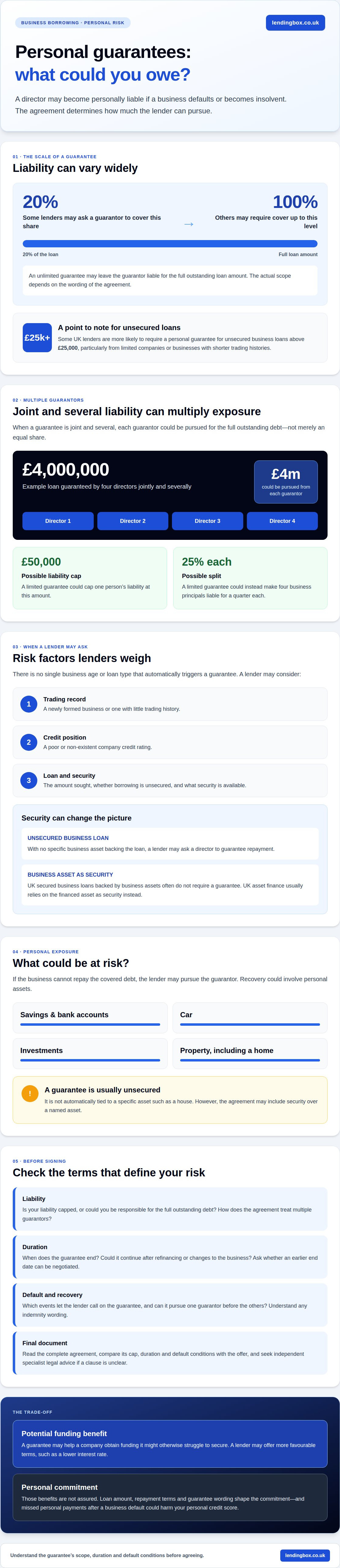
An unsecured loan is not backed by a specific business asset, so a lender may ask a director to guarantee repayment instead. Some UK lenders are more likely to require a personal guarantee for unsecured business loans above £25,000, particularly from limited companies or businesses with shorter trading histories.
The guarantee’s scope can vary. Some lenders may ask a guarantor to cover 20% of the loan, whilst others may require up to 100%. An unlimited guarantee can leave the guarantor liable for the full outstanding amount. By contrast, UK secured business loans backed by business assets often do not require a guarantee, because the asset provides security.
Situations requiring a guarantee
Lenders may ask for a guarantee when a business is relatively new, has little trading history, or seeks a significant loan. They may also require one if the company has a poor or no credit rating, or if the borrowing is unsecured.
There is no single loan type or business age that automatically triggers a guarantee. The lender weighs its risk, including the company’s trading record, credit position, loan amount and available security. Many lenders will not offer funding if directors refuse to guarantee it. UK asset finance usually relies on the financed asset as security rather than requiring a personal guarantee.
Can you have multiple guarantees for a business loan?
Yes. A lender may require several people to guarantee one loan, with the agreement setting out each person’s liability. A secured business loan uses business assets as security, while a director’s guarantee makes the signer personally liable. A lender may also ask a spouse or partner to sign separately. If the guarantee is called, the signer’s home, car, savings, investments or bank accounts could be used to settle the covered debt.
Negotiating liability and an end date
Before signing, a director can ask whether the agreement can include a liability cap or an end date. These terms matter because an unlimited joint and several guarantee may make each guarantor liable for the full outstanding debt, not just an equal share.
For example, if four directors guarantee £4,000,000 jointly and severally, each could be pursued for up to £4,000,000. A limited guarantee could instead cap one person’s liability at £50,000, or make four business principals liable for 25% each. A guarantee may run for the full loan term, but directors can try to negotiate an earlier end date or renegotiate after approval by keeping payments on time.
Spouses, partners and claimed assets
A lender may ask a spouse or partner to sign a guarantee, but they become a guarantor only if they agree to the commitment. Their signature can create personal liability separate from the director’s promise. Review the wording and potential exposure before signing.
If the business cannot repay the loan, a lender may pursue the guarantor for the outstanding amount. Recovery could involve personal assets, including bank accounts, cars, savings, investments or property. A personal guarantee is usually unsecured, so it is not automatically tied to a specific asset such as a house. However, the agreement may include security over a named asset.
If a guarantee remains part of your funding decision, personal guarantee insurance may help protect personal assets if the company cannot pay.
Benefits of signing a guarantee
Signing a personal guarantee may help a company obtain funding it might otherwise struggle to secure. A lender may also offer more favourable terms, such as a lower interest rate, if a director accepts personal liability. These are possibilities, not assured outcomes. The loan amount, repayment terms and guarantee wording all shape the commitment.
Before signing, establish exactly what the agreement covers. Check whether liability is capped, whether it covers the full outstanding debt, and which events allow the lender to call on the guarantee. Confirm when it ends and whether it continues after refinancing or changes to the business. These details show how long your personal assets could remain exposed.
Ask how the lender treats multiple guarantors. A joint and several agreement may make each signer responsible for the full debt rather than a fixed share. Clarify whether the lender can pursue one guarantor before the others. If the terms include an indemnity, understand that it may make you responsible for compensating the lender for its losses.
Signing a personal guarantee alone does not affect your personal credit score. However, a business loan application may involve a hard credit inquiry, and missed personal payments after a business default could harm your score. Consider both the guarantee and the wider credit application before agreeing.
Read the final document, not just a summary of the offer. Compare the liability cap, duration and default conditions with what you discussed. If a clause is unclear, seek independent specialist legal advice before signing. This can help you understand the practical effect of the wording and decide whether the funding terms justify the personal commitment.
Definition and purpose of a business loan personal guarantee
Understanding what a personal guarantee on a business loan means starts with the lender’s recovery rights. It adds a personal promise to the company’s borrowing: if the business cannot meet its obligations, the guarantor may have to pay the covered debt. The guarantee does not replace the company’s loan agreement. It gives the lender another way to recover money if the business’s resources fall short.
The signed terms define how the guarantee works. They may set a liability cap, cover the full outstanding amount, or include an indemnity, which is a promise to compensate the lender for losses. Distinguish a capped commitment from an unlimited one: the first limits exposure to the stated amount, while the second may make the guarantor liable for the full debt. The wording, not the label, determines the commitment.
In England and Wales, section 4 of the Statute of Frauds 1677 requires a guarantee to be evidenced in writing and signed by the guarantor or an authorised person. A formal agreement is common, though a simpler written record may also evidence the promise. If the company defaults, the lender may pursue the guarantor for the amount covered. Recovery action can include legal proceedings or insolvency steps.
The personal risk may extend beyond the original loan payment. A guarantee could make a director responsible for future company debts covered by its wording. If personal assets cannot meet the debt, the guarantor may face personal bankruptcy. Independent specialist advice can help clarify the agreement’s scope, duration and enforcement terms before signing. Assess the personal promise separately from the company’s finance, then decide whether the borrowing justifies that exposure.
Consider your borrowing needs alongside the guarantee’s terms. Review your funding options before making a commitment.
Lending Box: Business loan
Lending Box helps UK limited companies and LLPs explore business finance options, including business loans, revenue-based finance and invoice finance. The initial matching process has no impact on your credit score. One named relationship manager guides you through the options and application paperwork.
If a personal guarantee forms part of a proposed loan, consider how the liability affects your borrowing decision. Personal guarantee insurance can cover part of what you would owe if a lender calls on your guarantee. Cover can help protect your home and savings if the guarantee is called. One policy can cover up to five directors or shareholders.
Ready to discuss your business funding needs? Contact Lending Box.
Choose a funding route that fits your plans
Before committing, relate the borrowing decision to your business’s next stage. Consider how repayments fit expected cash flow, what flexibility the business needs, and how a personal commitment fits those plans. This keeps the focus on the outcome the funding should support, not just the amount available.
If you’re weighing what a personal guarantee on a business loan means for your plans, Lending Box can help you explore business loans, revenue-based finance and invoice finance. Consider which funding structure suits your cash flow and intended use, then discuss the options with a relationship manager.
Take the next step at your pace. Contact Lending Box to discuss your options and move forward with a clearer view of your business funding choices.
Frequently Asked Questions
What happens if the borrower doesn’t have many personal assets?
A guarantor’s limited personal assets do not automatically cancel the guarantee. The lender may still pursue them for the amount due, including through legal action. If their assets cannot cover the debt, personal bankruptcy may follow. Limited assets affect recovery prospects, not the promise itself. The agreement’s cap and wording matter even when the guarantor has little available to pay.
What is a personal guarantee on a UK business loan?
If you’re asking what a personal guarantee on a business loan is, it’s a written commitment that can make an individual responsible for company borrowing if the business fails to pay. In England and Wales, the guarantee must be evidenced in writing and signed by the guarantor or an authorised person. Read the document to identify the debt and obligations it covers.
How does a personal guarantee work if a business defaults on its loan?
After a business defaults, a lender may pursue the guarantor for the amount covered by the agreement. A lender may first take formal default and recovery steps against the company, a process that can typically take months. If the guarantee is called and enforcement action follows against the guarantor personally, that action will appear on their personal credit file.
Are personal guarantees on UK business loans limited or unlimited?
Guarantees can be limited or unlimited, depending on their terms. A limited guarantee sets a ceiling on the guarantor’s liability, while an unlimited guarantee may make them liable for the full outstanding loan. The document may also say whether liability is shared or joint and several. These details affect what each person could owe if the company defaults.
What is the difference between a capped and unlimited personal guarantee?
A capped guarantee limits the amount a lender can claim from that guarantor under the agreement. An unlimited guarantee has no stated ceiling and may expose the guarantor to the full outstanding debt. Check whether the cap applies to your liability alone or is shared between guarantors, and read any indemnity wording that could affect what you must pay.
What are the risks and consequences of signing a personal guarantee?
The main risk is personal liability if the business defaults. Recovery may involve legal action, a charging order against property, or insolvency or bankruptcy proceedings. Signing alone does not affect your credit score, but missed personal payments after a default could harm it. A credit application may also involve a hard inquiry, so understand the guarantee’s scope and the application process before committing.
Frequently Asked Questions
A guarantor’s limited personal assets do not automatically cancel the guarantee. The lender may still pursue them for the amount due, including through legal action. If their assets cannot cover the debt, personal bankruptcy may follow. Limited assets affect recovery prospects, not the promise itself. The agreement’s cap and wording matter even when the guarantor has little available to pay.
If you’re asking what a personal guarantee on a business loan is, it’s a written commitment that can make an individual responsible for company borrowing if the business fails to pay. In England and Wales, the guarantee must be evidenced in writing and signed by the guarantor or an authorised person. Read the document to identify the debt and obligations it covers.
After a business defaults, a lender may pursue the guarantor for the amount covered by the agreement. A lender may first take formal default and recovery steps against the company, a process that can typically take months. If the guarantee is called and enforcement action follows against the guarantor personally, that action will appear on their personal credit file.
Guarantees can be limited or unlimited, depending on their terms. A limited guarantee sets a ceiling on the guarantor’s liability, while an unlimited guarantee may make them liable for the full outstanding loan. The document may also say whether liability is shared or joint and several. These details affect what each person could owe if the company defaults.
A capped guarantee limits the amount a lender can claim from that guarantor under the agreement. An unlimited guarantee has no stated ceiling and may expose the guarantor to the full outstanding debt. Check whether the cap applies to your liability alone or is shared between guarantors, and read any indemnity wording that could affect what you must pay.
The main risk is personal liability if the business defaults. Recovery may involve legal action, a charging order against property, or insolvency or bankruptcy proceedings. Signing alone does not affect your credit score, but missed personal payments after a default could harm it. A credit application may also involve a hard inquiry, so understand the guarantee’s scope and the application process before committing.